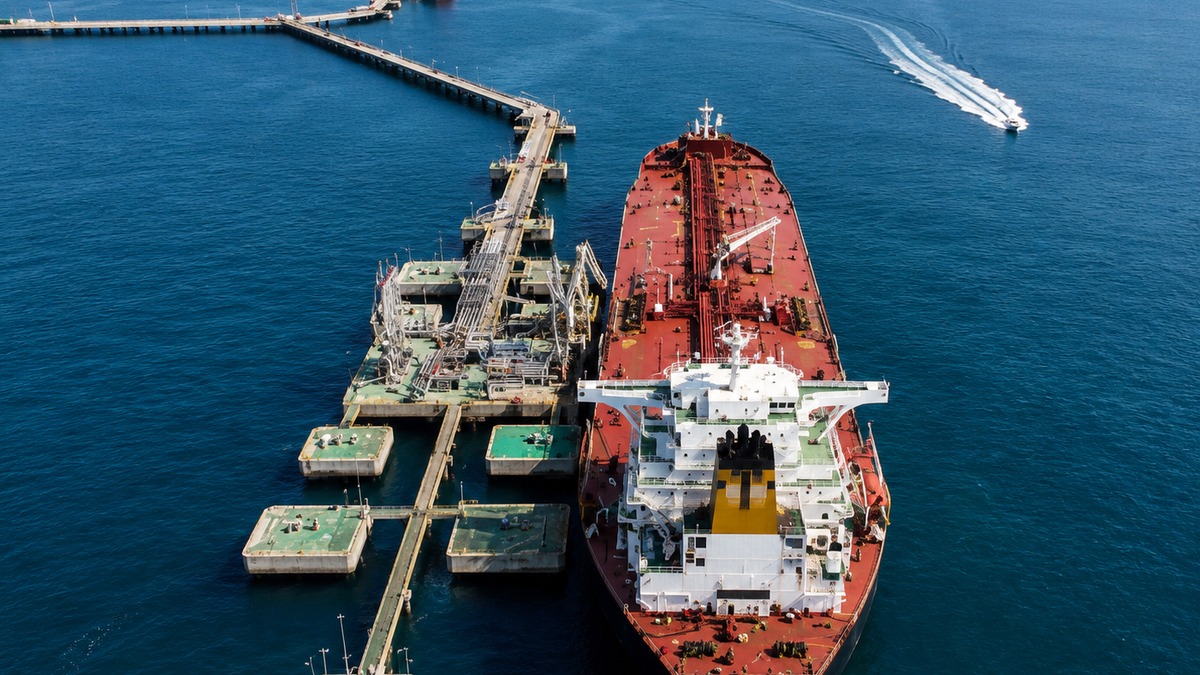
Before the current crisis, an estimated 120-140 vessels crossed the Strait of Hormuz every day, roughly half of them oil tankers moving approximately 20 million barrels of crude and refined products — about 25% of all seaborne oil trade on Earth, according to the International Energy Agency. Tanker-tracking data now shows a very different picture.
Traffic Has Collapsed Toward Zero
According to TankerMap, which tracks vessel transits through the strait, recorded zero tanker transits through Hormuz on the most recent complete tracking day — down 100% versus the prior seven-day average. That's an extreme figure, but it fits a broader collapse that's been building for weeks: at the height of the conflict, traffic fell to as few as two tankers a day, down from the roughly 60-70 tankers that would normally transit daily. S&P Global data cited by Al Jazeera showed 10 vessels passing through the strait on one recent Tuesday, down from 16 the previous Monday — a stark illustration of how thin and inconsistent traffic has become even on the strait's better days.
Insurance Costs Have Exploded
The collapse in traffic is directly tied to the cost of insuring a voyage through the strait. War-risk insurance premiums for vessels traversing Hormuz have surged from a historical range of 1-3% of a ship's hull value to between 7.5-10% of hull value, according to a report cited by Al Jazeera. To put that in concrete terms: insuring a large crude tanker, which can be worth well over $100 million, now costs a meaningfully larger share of that value simply for the war-risk component of a single voyage — on top of standard hull and cargo insurance. Separately, Kpler data reported by Gulf News showed VLCC (Very Large Crude Carrier) freight rates from the Gulf to China surging 24% in a single day to $1.67 per barrel, described as the year's steepest one-day spike, as shipping risk continued to be repriced upward.
The Two-Week Detour
For vessels avoiding the strait entirely, the primary alternative is the route around the Cape of Good Hope at the southern tip of Africa — a detour that adds 3,500 to 4,000 nautical miles and 10 to 14 days to a voyage, according to shipping-industry analysis. Most major carriers have shifted the bulk of their capacity to this route, which has left capacity tight and pushed rates higher whenever demand surges. It's worth noting this alternative isn't risk-free either: the Cape route runs adjacent to the Red Sea and Bab el-Mandeb corridor, which has its own history of disruption, meaning shippers are advised to confirm routing shipment by shipment rather than assuming a fixed, safe alternative path.
The Pipeline Workarounds
Beyond rerouting ships, Gulf oil producers have also turned to existing pipeline infrastructure to bypass the strait entirely. Saudi Arabia has been maximizing throughput on its East-West crude oil pipeline, which can carry approximately 7 million barrels per day to the Red Sea port of Yanbu, according to Congressional Research Service analysis. The UAE has similarly been maximizing its Abu Dhabi crude oil pipeline to the Gulf of Oman, avoiding the strait for at least a portion of its exports. These pipeline routes provide meaningful, though partial, relief — even at maximum throughput, they can't fully substitute for the roughly 20 million barrels per day that would normally transit the strait itself, which is part of why the IEA has described the disruption as the largest supply disruption in the history of the global oil market, with an estimated 8 million barrels per day of crude and 2 million barrels of condensates and natural gas liquids cut from global supply since the closure began.
Why This Matters Beyond the Headline Oil Price
Most coverage of this story, including our own recent piece on this week's energy sector surge, focuses on the headline oil price — a genuinely important number, but one that only tells part of the story. The shipping-side data covered here shows the disruption operating through several distinct, compounding channels at once: reduced physical supply reaching global markets, sharply higher costs to insure and transport whatever oil does move, and structurally longer transit times that ripple through global inventory and delivery schedules well beyond the Gulf region itself. Understanding these mechanics matters because they don't resolve as quickly as a single price print might suggest — insurance markets, in particular, tend to remain cautious for a period even after the underlying physical risk begins to ease, meaning elevated freight and insurance costs could persist for some time after any eventual resolution to the Hormuz standoff itself.