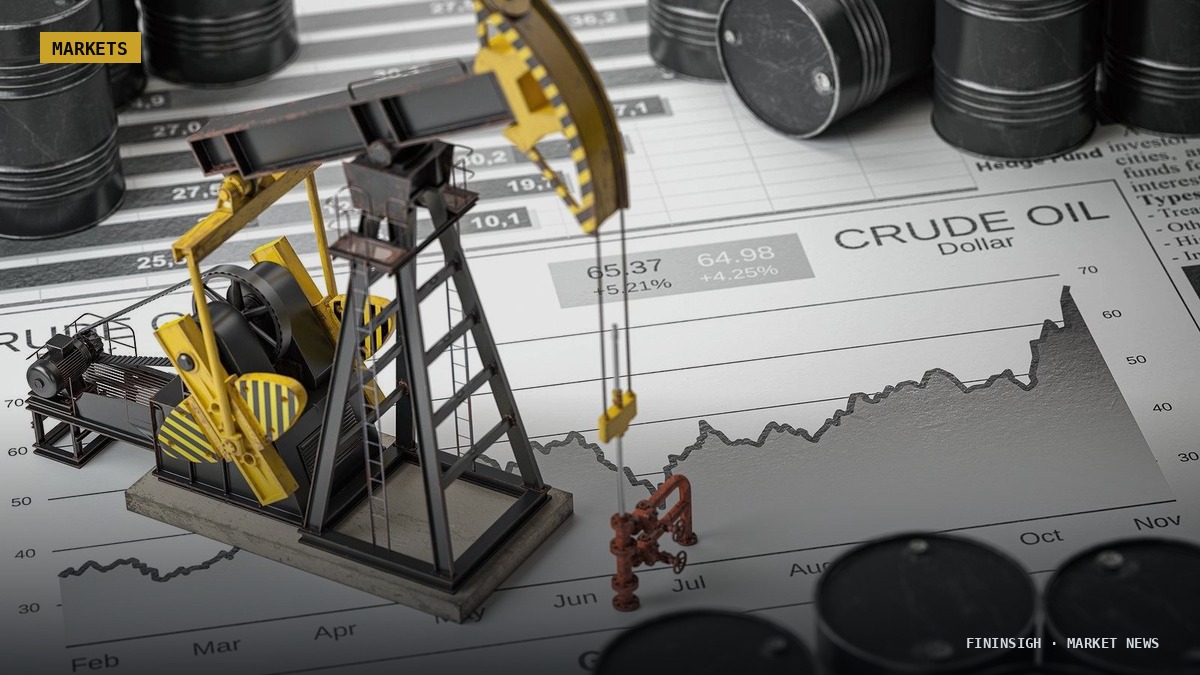
Crude oil is back in a familiar spot: climbing on geopolitics rather than on a straightforward change in supply or demand. Brent crude has traded as high as the mid-$80s per barrel this week, while WTI has pushed above $78, both benchmarks recovering toward levels last seen before a pullback earlier in the month.
Where prices stand
As of early August, Brent crude was trading in the $83–85 range, up more than 7% over the past month and roughly 25% higher than the same time last year, according to data compiled by Trading Economics. WTI, the U.S. benchmark, was trading near $77–78 a barrel over the same stretch. For context, Brent's 52-week range has spanned from about $58.72 to $126.41, and WTI's own 52-week range has been similarly wide — a reminder that oil, even by the standards of volatile asset classes, tends to move in sharp, headline-driven bursts rather than smooth trends.
What's actually happening at Hormuz
The Strait of Hormuz is a narrow shipping corridor between Iran and Oman that a large share of the world's seaborne crude oil passes through daily. Prices have stayed highly sensitive to on-again, off-again talk of an agreement to fully reopen and secure the strait. Reports have described an Iranian draft plan that would restrict U.S. and Israeli vessels from transiting the strait, with other nations considered to have "harmed" Iran also facing transit restrictions until compensation is resolved — terms that make a swift resolution considerably harder to reach. Adding to the tension, Abu Dhabi National Oil Co. has reported attacks on vessels transiting the strait, and Iran-aligned Houthi forces have separately claimed a large-scale attack against Saudi-backed forces in Yemen. Public statements from U.S. officials have described negotiations as ongoing, even as the specific terms remain contested.
Why a narrow strait moves a global price
It can seem disproportionate that a single shipping corridor moves a globally traded commodity this much — but that's exactly the point of a chokepoint. Oil supply itself hasn't necessarily changed; what's changed is the market's assessment of the risk that a meaningful share of global supply could be delayed, rerouted, or disrupted. Markets price in that probability continuously, which is why headlines about negotiations — not just actual supply disruptions — can move prices sharply in either direction. This is a useful real-world example of the broader idea covered in our guide on what causes market volatility: prices often react to shifts in perceived risk and expectations, not only to confirmed events.
The Brent-WTI spread as a signal
One detail worth watching alongside the headline price is the gap between Brent and WTI. The two benchmarks typically trade within a few dollars of each other, but that gap tends to widen specifically during regional supply events — and Brent has traded at a wider premium to WTI during the current Hormuz situation, since Middle East-linked supply disruptions affect Brent-priced barrels more directly than U.S. domestic production. A widening Brent-WTI spread is generally read as the market pricing in a regionally concentrated risk rather than a broad, global supply problem.
What this means beyond the pump
Oil prices don't just affect what you pay at the gas station. As a major input cost across transportation, manufacturing, and shipping, sustained moves in crude prices feed into broader inflation readings — which in turn factor into central bank policy decisions. That's part of why market participants tracking Federal Reserve rate expectations also keep an eye on oil: a renewed rise in energy prices adds a genuine inflationary consideration on top of the labor-market data the Fed is already weighing. For a deeper look at how prices like this feed into the wider economic picture, see our guide on how economic data moves financial markets.