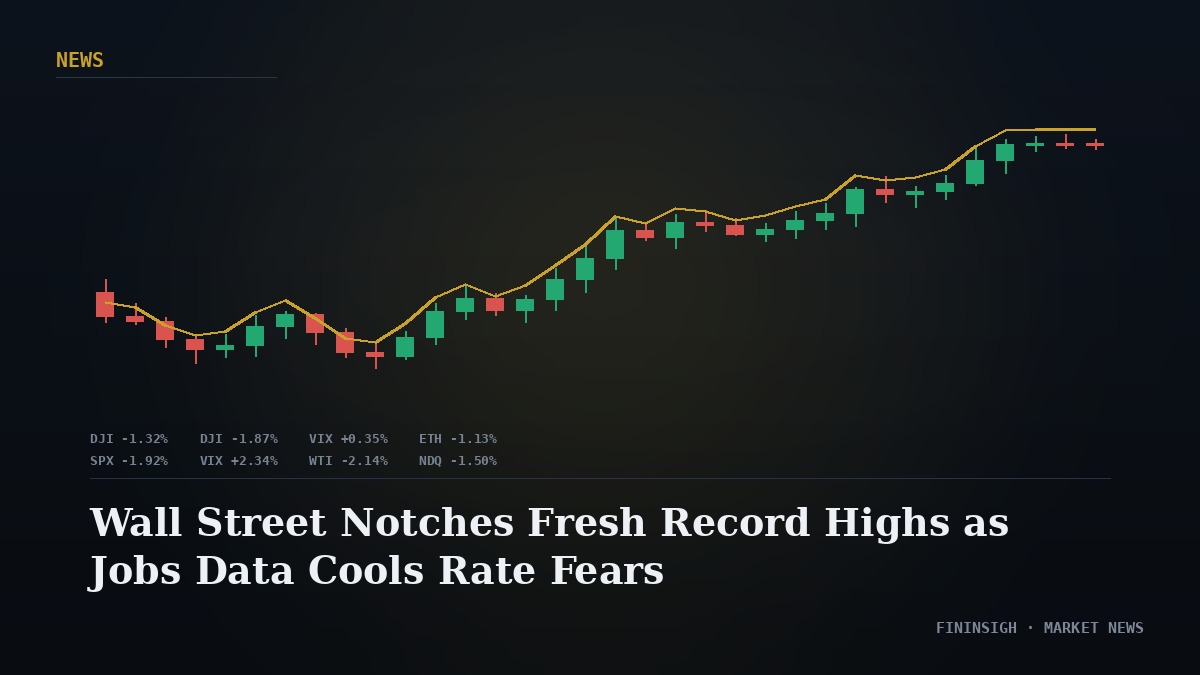
US equity markets closed out the week ending August 7 with a second consecutive week of gains, as all three major indices touched fresh milestones. The S&P 500 climbed roughly 0.6% on Friday to a record close above 7,750, having crossed the 7,700 threshold for the first time earlier in the week. The Nasdaq Composite outpaced the broader market, adding around 1.3% to finish near 26,690, while the Dow Jones Industrial Average also advanced to close above 54,000.
The Week in Numbers
Taken together, the S&P 500 advanced roughly 3.6% over the course of the week — a notably strong move for a five-day span. Earlier in the week, the Dow had already set a fresh record high after a broad rally on the first trading day of August, and the index added further gains as the week progressed. The Nasdaq's outperformance reflected continued strength in large technology names, which have led much of the market's advance through the summer.
What Moved the Market
The catalyst for Friday's rally was the July employment report, which showed an unexpected loss of jobs for the month. Under normal circumstances, a weak labor market reading might unsettle investors. In this case, markets read it differently: traders concluded that a softening labor market gives the Federal Reserve more room to leave interest rates unchanged rather than raise them, since a cooling jobs market typically eases inflationary pressure over time.
That interpretation extended a theme that has run through much of the summer — markets have generally rewarded data that reduces the odds of further rate hikes, even when the underlying data point (in this case, job losses) would traditionally be read as a negative economic signal. It's a reminder that markets react to changing expectations about future policy at least as much as they react to the current state of the economy.
Stocks in Focus
A handful of individual stories stood out within the broader rally. Boeing shares had their best week since early April, helped by a combination of factors: the aircraft maker received Federal Aviation Administration approval for its 737 Max 7 to resume flying after a multi-year delay, a decline in oil prices eased cost pressures, and at least one major bank upgraded its rating on the stock during the week.
Airbnb also drew attention after beating analyst estimates and raising its full-year revenue and margin guidance, sending shares to a four-year high on Friday. Earlier in the week, Amazon briefly crossed a $3 trillion market capitalization for the first time before pulling back after a large insider share-sale filing, while Palantir posted one of its best single-day gains in more than two years following a strong quarterly earnings report.
What It Means for the Fed
The July jobs report adds to a broader data picture the Federal Reserve will weigh at upcoming policy meetings. Markets had already been pricing in a high probability that the Fed would hold its benchmark rate steady in the near term, and the weaker employment data reinforced that expectation. Investors will next turn their attention to inflation readings due later in August, which will factor into the Fed's assessment of whether current policy remains appropriately calibrated.
It's worth remembering that a single data point rarely determines Fed policy on its own. Policymakers typically weigh a broad range of indicators — employment, inflation, growth, and financial conditions — before making decisions, and subsequent data releases can shift expectations again in either direction.
The Bigger Picture
This week's records extend a rally that has pushed major US indices to all-time highs multiple times over the past several weeks. For long-term investors, individual record closes are less significant on their own than the broader trend they're part of — and markets that rise on shifting rate expectations can also give back gains quickly if that outlook changes. As always, it's worth separating short-term market reactions to individual data releases from the longer-term fundamentals that typically matter more for a diversified portfolio.