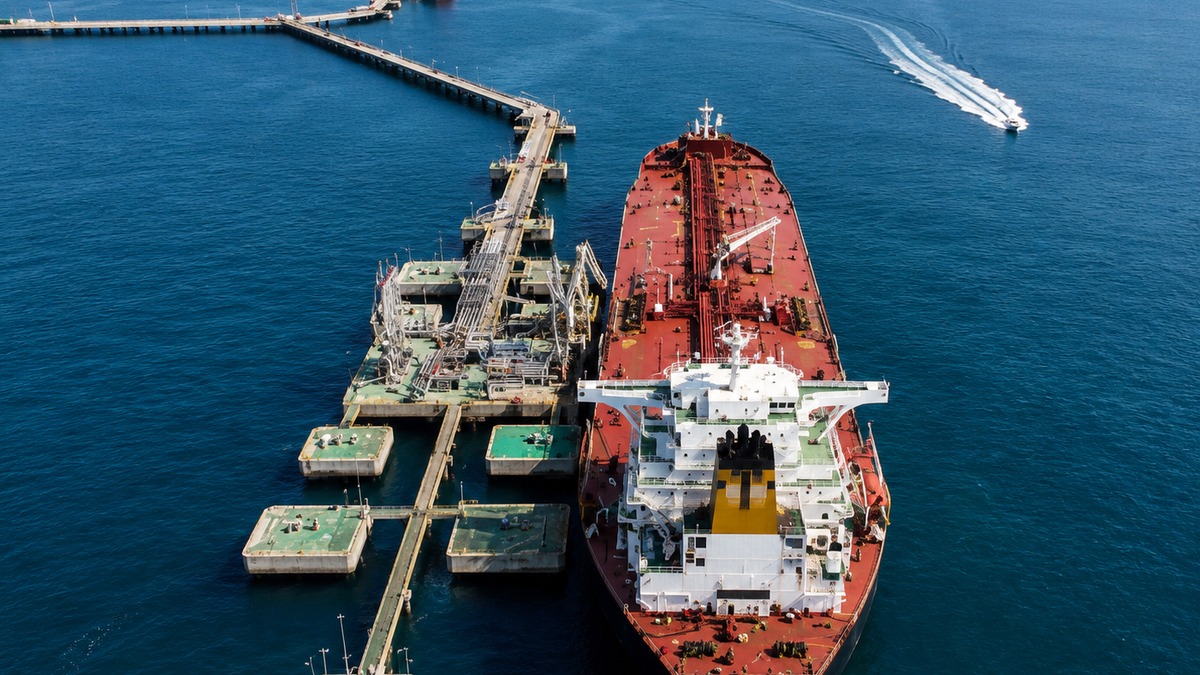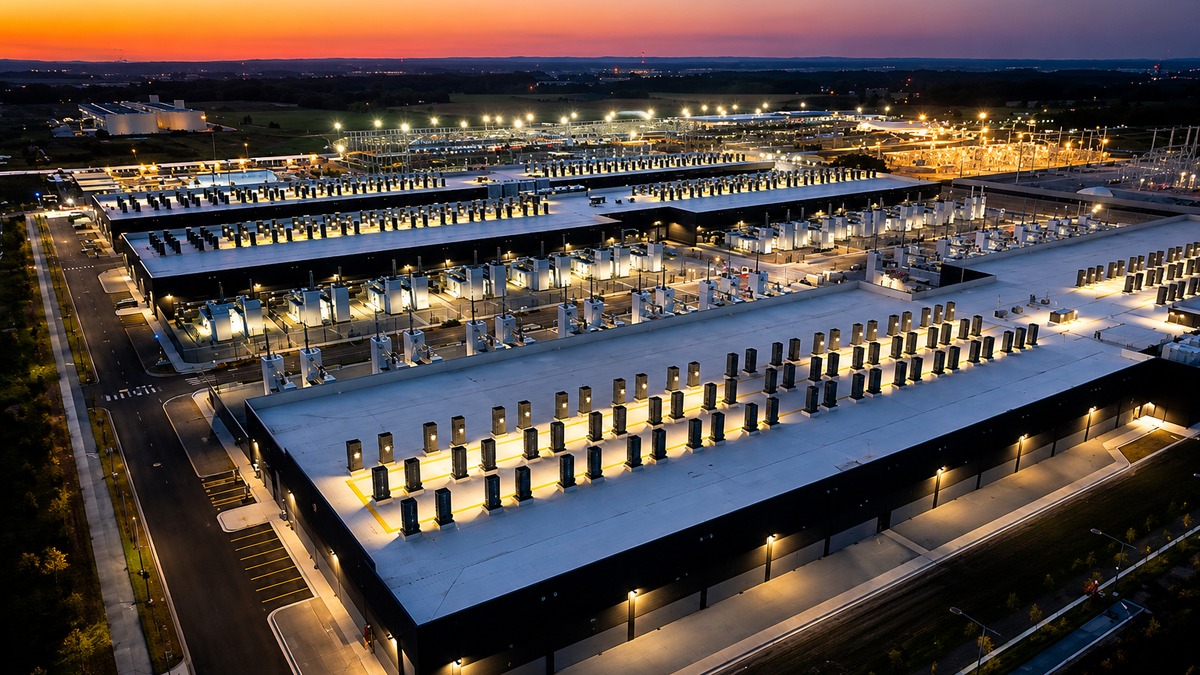
The scale of capital committed to AI infrastructure in 2026 is genuinely difficult to overstate. J.P. Morgan estimates hyperscaler capital expenditure will reach $697 billion this year. BloombergNEF puts the combined capex of the 14 largest publicly owned data center operators globally at close to $750 billion — up from a little less than $450 billion the year before. Industrial Info Resources data shows developers and Big Tech firms plan to start construction on 2,913 data centers valued at approximately $2.4 trillion over the 2026-2030 period, compared with about 313 data centers valued at $142.2 billion actually completed over the prior three years.
The Capital Is Not the Problem
Individually, the companies driving this spending read almost like a roll call of the largest balance sheets in corporate history: Amazon at roughly $200-220 billion in 2026 capex (most, though not all, directed at data centers), Alphabet at $175-185 billion, Meta at $115-135 billion, Microsoft tracking toward $120 billion or more, and Oracle targeting $50 billion. Combined, these five companies alone plan to spend somewhere in the range of $660-690 billion on infrastructure this year — nearly double 2025 levels. This is capital these companies clearly have access to; the constraint on the AI buildout, in other words, was never really a question of whether the money could be raised.
"Capacity-Constrained," Not Demand-Constrained
What's genuinely notable is the language these companies themselves are using to describe their own limitations. Amazon lifted its 2026 AI capex guidance to $220 billion in late July while explicitly stating it remains "capacity-constrained" — meaning the company describes itself as limited not by how much it's willing to spend, but by how quickly it can actually bring new compute capacity online. Across the largest hyperscalers, the consistent theme reported in recent earnings commentary is the same: markets are supply-constrained rather than demand-constrained. In plain terms, these companies believe they could sell more AI compute capacity than they currently have — the limit isn't customer appetite, it's the physical ability to build and energize new sites fast enough.
From "Buy" to "Build"
This shift shows up concretely in how the largest players are now approaching infrastructure. Recent coverage from Data Center Knowledge describes Microsoft, Alphabet, and Meta pivoting "from buy to build" in their approach to AI infrastructure — moving away from simply purchasing capacity or equipment from third parties and toward directly developing and owning facilities themselves. In their most recent quarterly earnings calls, these companies reportedly shifted their public commentary away from aggregate capex figures and toward more specific, operational metrics: time-to-energy (how quickly a new site can actually be connected to power), large-scale networking, power procurement strategy, and the speed of converting built infrastructure into revenue-generating compute. That's a meaningful change in emphasis — it suggests the companies themselves increasingly view speed-to-power, not capital availability, as the metric that actually determines how fast they can grow.
Why Power, Not Chips, Is Now the Bottleneck
The specific mechanics of why power has become the binding constraint are worth understanding. A data center campus requires not just electricity in the abstract, but a specific combination of grid connection capacity, substation infrastructure, and often new transmission lines — all of which face lengthy permitting, construction, and utility-cooperation timelines that don't move at the same speed as capital deployment or chip procurement. Northern Virginia, historically the densest data center market in the world due to its network density and enterprise demand, has become harder to underwrite specifically because of severe power congestion — even as the region retains deep operator expertise and infrastructure. That's part of why capacity is increasingly being pushed toward markets like Columbus, Salt Lake City, San Antonio, Phoenix, Dallas, Atlanta, and parts of the Upper Midwest — not because they're cheaper, but because their power story is cleaner and faster to execute. In at least one case, Amazon has reportedly pushed Virginia regulators to let AI data centers fund their own grid upgrades directly, rather than waiting on the standard utility investment timeline — a direct, practical response to this exact bottleneck.
What This Means for How You Read the AI Story
For investors trying to make sense of the AI infrastructure buildout, this reframes what's actually worth watching. Aggregate capex figures — while still useful for understanding the overall scale of investment — are becoming a less precise signal of near-term growth than power-specific metrics: how quickly a company can secure grid interconnection, how much colocation vacancy exists in a given market (JLL research shows available data center space will remain scarce at least through 2027), and how successfully a company is diversifying into markets with cleaner power access. This also connects directly to the fundamentals question raised in our related piece on this week's AI infrastructure earnings: a company with strong contracted revenue and a growing backlog, like CoreWeave, still depends on how quickly it can physically bring capacity online to convert that backlog into realized revenue — power access is the constraint standing between committed demand and actual growth.