Oil prices spent much of this year reacting to the same underlying story — the closure of the Strait of Hormuz and the resulting standoff between the U.S. and Iran. This week's rally reflects a new development within that same story: a marked hardening in the U.S. government's public rhetoric, paired with an increasingly stark warning from the world's leading energy forecaster.
The Numbers
Brent crude futures rose 1.7% to close at $88.52 a barrel on Friday, with West Texas Intermediate gaining 1.4% to settle at $82.40 — both benchmarks up more than 5% for the week, following a roughly 2% dip in Thursday's session. Brent had traded as high as $88.98-89.53 at points during the week, recovering from earlier losses as talks to reopen the strait remained deadlocked despite periods of apparent optimism. For the year, Brent remains well below its 52-week intraday high of $120.88 touched in April, but comfortably above its 52-week low of $58.66 from December.
"Economic Isolation" — A Notably Sharper Tone
The specific catalyst for Friday's move was rhetorical rather than physical: U.S. Treasury Secretary Scott Bessent said in an interview that Washington would impose measures aimed at the "economic isolation" of Iran that "have never been seen" — a notably more aggressive framing than prior statements in this standoff. Language of this kind matters to oil markets because it signals an intent to escalate economic pressure rather than pursue de-escalation, even without new physical developments on the ground. Markets tend to price threatened future actions, not just realized ones — which is part of why a statement alone, without any accompanying military or diplomatic event, was enough to move crude prices meaningfully.
The Blockade Stays in Place, Indefinitely
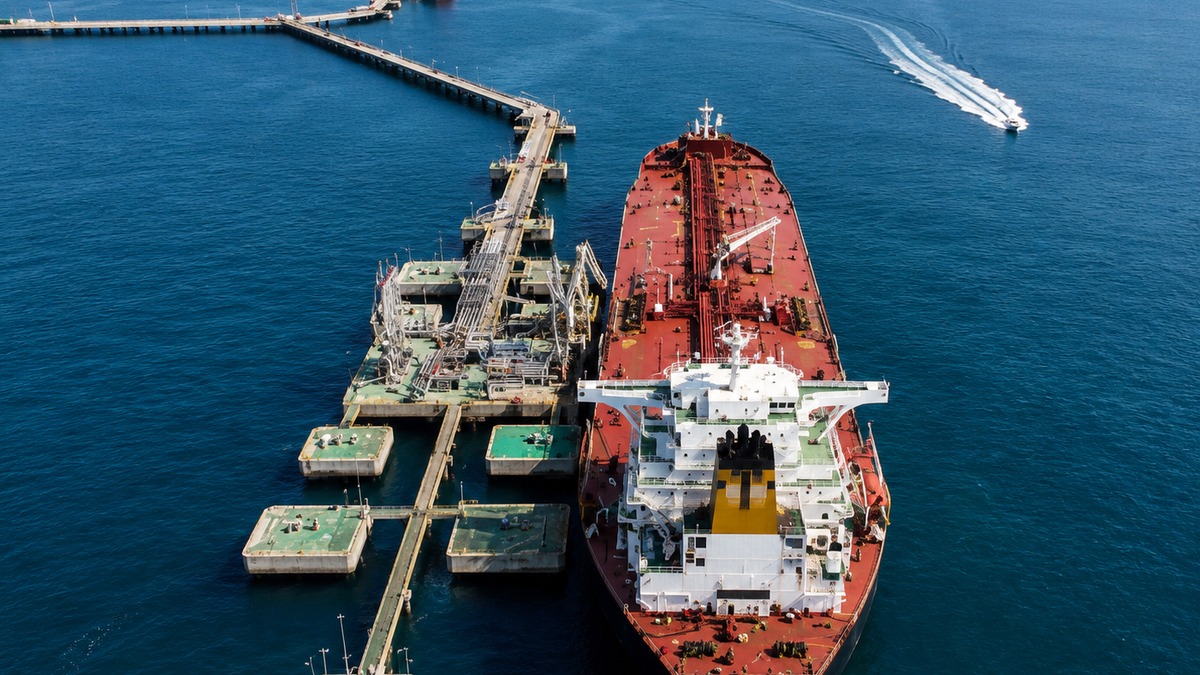
Bessent's comments came alongside remarks from U.S. Defense Secretary Pete Hegseth, who told reporters that U.S. forces could maintain an indefinite blockade of Iranian ports. That combination — an open-ended military posture paired with escalating economic threats — reinforces a picture of a standoff without a clear, near-term resolution path, which tends to keep a geopolitical risk premium embedded in oil prices for longer than a shorter, more clearly time-bound crisis would. Separately, U.S. officials reported American forces are increasing their capacity to escort vessels through the strait, even as shipping remains genuinely risky and some tankers have reportedly switched off their transponders while transiting — a detail covered in more depth in our companion piece on what's actually happening to the ships.
The IEA's Supply Deficit Warning
Adding to the picture, the International Energy Agency this week warned of a deeper global oil supply deficit, forecasting the widest shortfall in 2026 in five years. That's a meaningfully different kind of signal than day-to-day price action — it reflects the IEA's own forward-looking assessment of the physical supply-demand balance, not just current sentiment. A widening supply deficit forecast, from an agency whose baseline job is tracking these fundamentals closely, adds a layer of structural concern on top of the immediate Hormuz-driven volatility, suggesting the market may need to price in tighter physical supply conditions even independent of how the current standoff eventually resolves.
What Hasn't Changed
It's worth noting what this week's developments did not resolve. Iran and Oman reportedly have yet to reach an agreement on reopening the strait, despite earlier signals a deal was close — the same deadlock that's persisted for weeks. Some relief has come from additional Middle Eastern crude reportedly making its way to the U.S., helping ease low inventories, and U.S. officials claim up to 9 million barrels per day are still passing through the waterway despite the disruption — evidence that the situation, while serious, has not resulted in a complete halt to all oil movement through the region. That partial flow is part of why oil prices, while elevated and volatile, haven't spiked to the extreme levels some worst-case scenarios anticipated when the crisis first began. For the fuller, ongoing context on this standoff, see our earlier coverage of the energy sector's reaction to the Hormuz impasse.